 I think it came out pretty well. It's a 12" block.
 I based the block on this pattern and altered it somewhat,

to recreate this antique block from Lizzy.
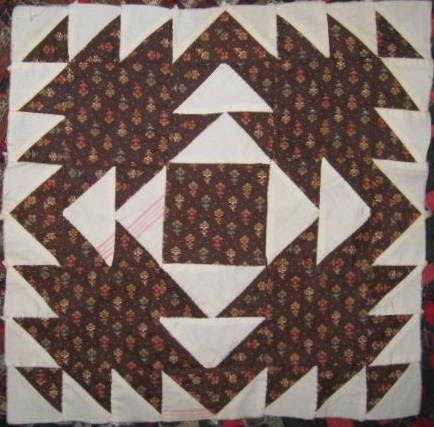
When I finished the block I though, Oh, twins!

Lizzy's block was on top of my blue sampler blocks when I realized the center was the same format as most of the other blue blocks, with a square in the center, either on-point or horizontal, surrounded by a square or two in the opposite position. Some of these blocks are also based on an 8-unit grid; others on a 6-unit grid.

First, could I mix brown blocks with the blue ones?
Second, would I dare use an antique block in a quilt that will get washed and dried at least once in its life? It's a well-made block with good, sturdy fabric, but . . . .
I have five more blue blocks already made. And I'm currently thinking of sashing and borders in an old-style pink fabric. (Or not.) Hmmmm. The blocks are too busy to use a fabric with a busy pattern.
I hope you've had a more productive January than I have!
--Nancy.

